
PRICING · MAY 28, 2026 · BY DAVID MELNYCHUK
Cabinet Refacing vs Replacing Cost, Plus When Painting Wins: An Honest Verdict
Every kitchen conversation at our estimate table eventually lands on the same fork in the road: paint the cabinets, reface them, or tear them out. The internet answers this with whichever option the writer happens to sell. We build kitchens either way, so we have no reason to steer you. Here is how the three routes actually compare in Lancaster and Chester County, with real numbers and the rules we use to call it.
The short version: the cabinets themselves decide. Not your budget, not the trend, the boxes. Good boxes open up the cheap options. Bad boxes close them, no matter what the refacing salesman says.
The three routes and what they cost around here
First, the menu with honest ranges for an average 10 by 12 kitchen with 20 to 25 cabinet openings:
- Professional cabinet painting: around here the going rate is $3,500 to $7,000. Sprayed finish, new hardware, doors off and labeled. DIY runs $300 to $600 in materials plus every weekend for a month.
- Refacing: new doors, drawer fronts, and veneer over the boxes. The going rate in our market is $9,000 to $16,000. Our kitchen refresh tier, which usually pairs refacing level work with counters and lighting, lands at $8,000 to $18,000 because one in-house crew wastes less time between trades.
- Replacing: a full pull and replace kitchen with new cabinets, counters, and flooring runs $28,000 to $50,000 around here. Our jobs typically land at $25,000 to $45,000. Move walls or plumbing and you are in layout change territory: $45,000 to $80,000 and up.
Start with the boxes: the plywood vs particleboard test
Before you compare prices, grade what you own. Open a base cabinet and look at the exposed side and shelf edges. Plywood shows thin layered lines. Particleboard shows compressed wood chips, usually behind a white melamine skin. Plywood boxes from the 80s and 90s are often better built than budget cabinets sold today. Particleboard is not automatically bad, but it fails differently, and it fails for good.
Run the sag test. Empty the longest shelf and sight along its front edge. A bow of more than about a quarter inch over a 30 inch span means the material has given up, and new doors will not fix it. Then check the sink base floor. Press on it. If it feels soft or the surface has bubbled and swollen from an old leak, that particleboard has absorbed water and turned back into sawdust. It never recovers.
Last check: hinge screws. Tighten one. If it spins without biting, the material is stripped. One stripped screw is fixable. A cabinet full of them tells you where this kitchen is headed.
Painting: the cheap route and its fine print
Painting is the right call more often than contractors like to admit. If the boxes are sound, the layout works, and your only real complaint is honey oak from 1994, a sprayed professional finish changes the whole room for a fifth of replacement cost. The good shops remove doors, degrease, sand, prime with a bonding primer, and spray a catalyzed or 2K urethane finish that cures hard. Brush and roller jobs with wall paint chip within a year at the trash pull. That is not a paint problem, it is a product problem.
Now the fine print, and it matters in this county because so many kitchens here are oak. Oak grain telegraphs through paint. Oak has open pores, and paint settles into them instead of hiding them. You get a white cabinet with a faint zebra pattern reading through, which some people like and most people did not order. Killing the grain takes grain filler, extra sanding, and an extra shop day, which adds $800 to $1,500. Maple, birch, and MDF doors paint clean without that step.
Painting also keeps everything else old: the hinges, the slides, the drawer boxes, the interior shelves. Budget $40 to $60 per opening if you want soft close hardware added while the doors are off.
Refacing: the middle road, and when it is a trap
Refacing replaces the doors and drawer fronts entirely, skins the visible box faces and ends with matching veneer, and installs new hinges and slides. Done well, it looks like a new kitchen from every angle a guest will ever see, and it keeps counters and plumbing in place, so the kitchen stays usable through most of the work. On plywood boxes with a layout you like, it is a legitimately smart buy.
Here is the trap, and it is common enough that we check for it on every refacing estimate: refacing bad boxes. Veneer over a swollen sink base is a new jacket on a broken frame. The doors are new, the slides are new, and the structure holding them is still sagging particleboard with stripped screw holes. Some refacing companies will happily skin whatever you have, because their product is the skin. Two years later the shelf bows return and the new doors go out of square.
Our rule: if the boxes fail the sag test or the sink base is swollen, refacing is off the table. And if the refacing quote crosses about 60 to 70 percent of what new cabinets would cost, you are paying nearly new prices for old bones. At that point replacement is the honest answer.
Replacing: when new boxes are the honest answer
Replacement wins in three situations: the boxes are shot, the layout fights you daily, or you want changes refacing cannot deliver, like different cabinet heights, a pantry wall, or an island. New cabinets also reset everything at once: plywood boxes, dovetailed drawers, soft close everywhere, and interiors designed for how people actually store things now. The National Kitchen and Bath Association publishes planning guidelines on aisle widths and landing zones, and a full replacement is the only route that lets you fix violations of them.
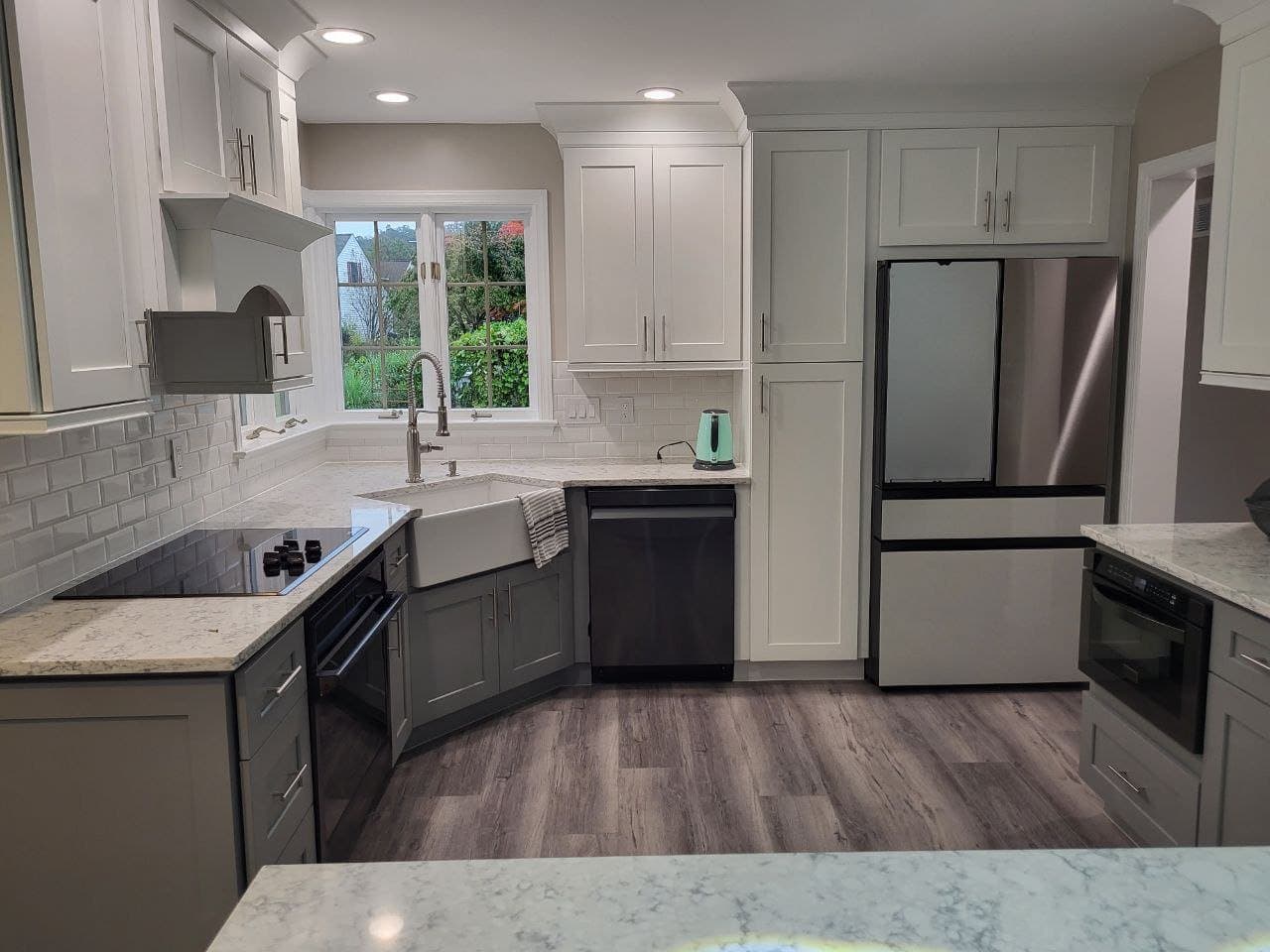
For a picture of what pull and replace looks like in practice, see our Downingtown kitchen remodel: a 2003 builder grade kitchen with the original honey oak, replaced with new cabinets, quartz counters, and a farmhouse sink in four weeks. That project would have been a poor refacing candidate, not because the boxes were ruined, but because the owners wanted the layout and the window changed, and no veneer does that.
Full details on our process and current ranges are on the kitchen remodeling service page.
The verdict rules we actually use
Cut through the sales noise with five rules. They settle almost every kitchen we walk into:
- Boxes solid, layout works, you only hate the color: paint. Cheapest good outcome in remodeling.
- Boxes solid, doors dated or damaged, layout works: reface, and add soft close hardware while it is open.
- Sink base swollen, shelves sagging, screws stripped: replace. No surface treatment fixes structure.
- Refacing quote over 60 to 70 percent of a replacement quote: replace. You are one step from new for a few steps more money.
- Layout is the real complaint: replace, because paint and veneer cannot move a wall of cabinets six feet.
When not to hire us
Honesty section. If your cabinets pass every test and all you want is color, a dedicated cabinet painting shop with a spray booth may beat our number, because that is all they do and their overhead is built for it. We will tell you that at the estimate. Likewise, if this is a rental refresh where a weekend of DIY brush painting is good enough for the tenant market, spend the $400 on materials and keep the rest.
What we will not do is reface boxes that failed the water test, even if that costs us the job. A kitchen we touched sagging two years later is more expensive to us than the lost contract. If a refacing company says your swollen sink base is fine under new veneer, that tells you what their warranty will be worth.
What each route means for your next month
Timeline matters as much as price when it is your only kitchen. Professional painting takes the doors away for 5 to 10 days, but the kitchen stays fully usable. Refacing runs about one to two weeks on site with the kitchen usable most evenings. Pull and replace is three to five weeks with a real gap in the middle where the sink is gone and dinner comes from a microwave in the dining room. Plan for it, budget a takeout line item, and it is manageable. Pretend it will not happen and week two gets tense.
Whichever route fits, get the scope in writing with the box condition noted. If a contractor quotes refacing without opening a single cabinet, they are quoting the skin, not your kitchen.
Questions we hear a lot
Is cabinet refacing really cheaper than replacing?
Usually 40 to 60 percent cheaper, because the boxes, counters, and plumbing stay. The math flips when boxes need repair or the refacing quote creeps toward 70 percent of replacement cost. At that point new cabinets buy decades of structure for a modest step up.
Can particleboard cabinets be refaced?
Yes, if they are dry, square, and holding screws firmly. Plenty of particleboard boxes from good manufacturers are fine candidates. Swollen bottoms, sagging shelves, or stripped hinge screws disqualify them, and veneer will only hide the problem until it moves the new doors.
How long does a professionally painted cabinet finish last?
A sprayed catalyzed or 2K urethane finish holds up 8 to 10 years with normal use before wear shows at the high traffic pulls. Brushed wall paint on cabinets often chips within a year. The product and prep are the whole difference, not the color.