
PRICING · MAY 5, 2026 · BY DAVID MELNYCHUK
Tub to Shower Conversion Cost in PA: The Real 2026 Numbers
Pull out a tub nobody has actually bathed in since 2019 and build a walk-in shower in its place. It is the most requested bathroom project we get in Lancaster and Chester County, and the first question is always the same: what does it cost? The honest answer is a range, because half the price is hiding behind the tub. This post breaks the number into its real parts, demo, plumbing, waterproofing, tile and glass, so you can see where your bathroom lands before anyone sets foot in it.
For reference, we are DAVMEL Remodeling, a registered PA home improvement contractor (HIC #PA214721) based in Denver PA. One in-house crew handles our demo, framing, tile and finish work. The numbers below come from our own 2026 job costs, not a national cost calculator.
The short answer for Lancaster and Chester County
Around here, the going rate for a tub to shower conversion runs about $8,000 to $15,000 depending on tile and glass choices. Our jobs typically land between $7,000 and $14,000. Same materials, same inspections. The difference is that one in-house crew wastes less time between trades, and idle days between subs are what quietly inflate remodeling quotes.
One warning about online cost calculators: they average national labor rates and assume nothing goes wrong. Neither holds in a 70 year old farmhouse outside Lititz or a 1988 townhouse slab in Lancaster. Use the tiers below to bracket your project, then get itemized quotes so you can compare like against like.
Within that range, three tiers cover most projects:
- Acrylic or composite surround with a sliding door: $7,000 to $9,500. Fast, watertight, fewer grout lines to maintain.
- Tiled shower with a framed glass slider: $9,500 to $12,000. The most popular middle path, and the one pictured on most of our project pages.
- Tiled shower with a niche, bench and frameless glass: $12,000 to $14,000. The full custom build.
- What pushes a job toward the top: a drain move over a finished ceiling or slab, curbless entry, natural stone tile, a relocated valve wall, or custom frameless glass.
Demolition and disposal: the first $800 to $1,500
A cast iron tub weighs 300 to 400 pounds. Getting one out of a second floor hall bath without wrecking the stair walls is a job in itself, which is why demo and disposal typically eat $800 to $1,500 of the budget. That covers floor protection through the house, cutting the tub out in sections, stripping the wet wall tile or surround down to the studs, and hauling everything away.
Demo is also the moment of truth. Once the tub apron comes out we finally see the subfloor, and in homes built before 1980 there is often soft plywood around the drain or a framing repair somebody improvised decades ago. We price known conditions up front and put any surprise in writing before touching it. Ask every bidder how they handle discovered rot. The answer tells you how the whole job will go.
The drain move: plumbing is the wildcard
Tubs drain through a 1.5 inch line at one end. Showers need a 2 inch drain, usually relocated toward the center of the new pan. That means opening the floor, rerouting the trap and tying into the existing stack. Budget $600 to $1,800 for this work when there is access from a basement or crawlspace below.
Access is the whole game. If your bathroom sits over an unfinished basement, the plumbing happens from below and the cost stays at the low end. If it sits over a finished kitchen ceiling, add the cost of opening and repairing that ceiling. On a concrete slab, add saw cutting. This is why two identical looking bathrooms can be $2,000 apart on the same street.
While the wall is open, replace the shower valve. A new pressure balanced valve costs a few hundred dollars installed during the conversion, and several times that later, when tile has to come off to reach it.
Waterproofing: the part you never see and cannot skip
Behind the tile of a properly built shower is a continuous waterproofing system: a sloped pan, sealed corners, banded seams, and a membrane or coated foam board on the walls. Materials and labor for this layer run $1,200 to $2,500, and it is the best money in the entire project. Tile and grout are not waterproof. The membrane is the shower. The tile is just its armor.
This is also where the too good to be true quotes cut corners. A $5,000 conversion ad usually means an acrylic panel glued over whatever is back there, no drain relocation, no membrane, no inspection. It photographs fine on day one. The difference shows up in year three, in the ceiling below.
Glass and fixtures: where your choices move the number
Glass is the most visible line item and the easiest one to control. A framed bypass slider runs $900 to $1,500 installed. A frameless panel and door, custom measured after the tile is finished, runs $1,800 to $3,500. Both keep water in the shower. One of them is furniture.
Fixture cost is entirely in your hands. A solid Delta or Moen trim kit runs $150 to $400. A thermostatic system with a rain head and hand shower can pass $1,500 before anyone installs it. We set both with the same care, so put your money where you will feel it daily: valve quality first, glass second, tile pattern last.
A note on curbless entries, since everyone asks: dropping the curb entirely is possible in most homes, but it means recessing the floor structure or building the whole bathroom floor up to meet the pan. That is real framing work and typically adds $1,500 to $3,000. Worth it for accessibility and for looks, and absolutely not the place to improvise the slope math.
Grab bar blocking: the cheapest insurance in the project
While the walls are open we install solid wood blocking, flat 2x lumber screwed between the studs, everywhere a grab bar could ever go: the entry, the valve wall, beside a bench. During framing this costs almost nothing. Adding it after tile means cutting the shower apart.
You do not have to mount the bars now. Blocking simply means that any day in the next 30 years, a bar goes up in 20 minutes and anchors into wood instead of hollow board. The National Institute on Aging reports that more than one in four adults over 65 falls each year, and bathrooms are where a large share of those falls happen. A walk-in shower with blocking behind the tile, a low curb and a handheld spray is a big part of what lets people stay in their own homes.
When you should not convert your tub
Here is the part the conversion ads skip. If this is the only tub in your house, think hard before removing it. Families with small children bathe them in tubs, and buyers with small children notice a house that has none. Agents in our market will tell you the same thing we do: zero tubs narrows your buyer pool. If you have two full baths, convert one and keep the tub in the other. If you have one bath and plan to sell within a few years in a family neighborhood, keep the tub.
The other reason to hold off is budget honesty. If your tub and surround are sound and you simply dislike how they look, a reglazing crew can refinish the tub for a few hundred dollars, and we can rebuild the tile surround around it for $2,500 to $5,000. That beats a full conversion you cannot fund properly. We do not offer reglazing, and we will still tell you when it is the right call.
Convert with confidence when:
- Nobody in the house has taken a bath in years and everyone showers
- Stepping over a 15 inch tub wall has become a genuine daily hazard
- You have a second bathroom that keeps a tub
- The existing surround is failing anyway, so demo is already on the menu
What a real conversion looks like
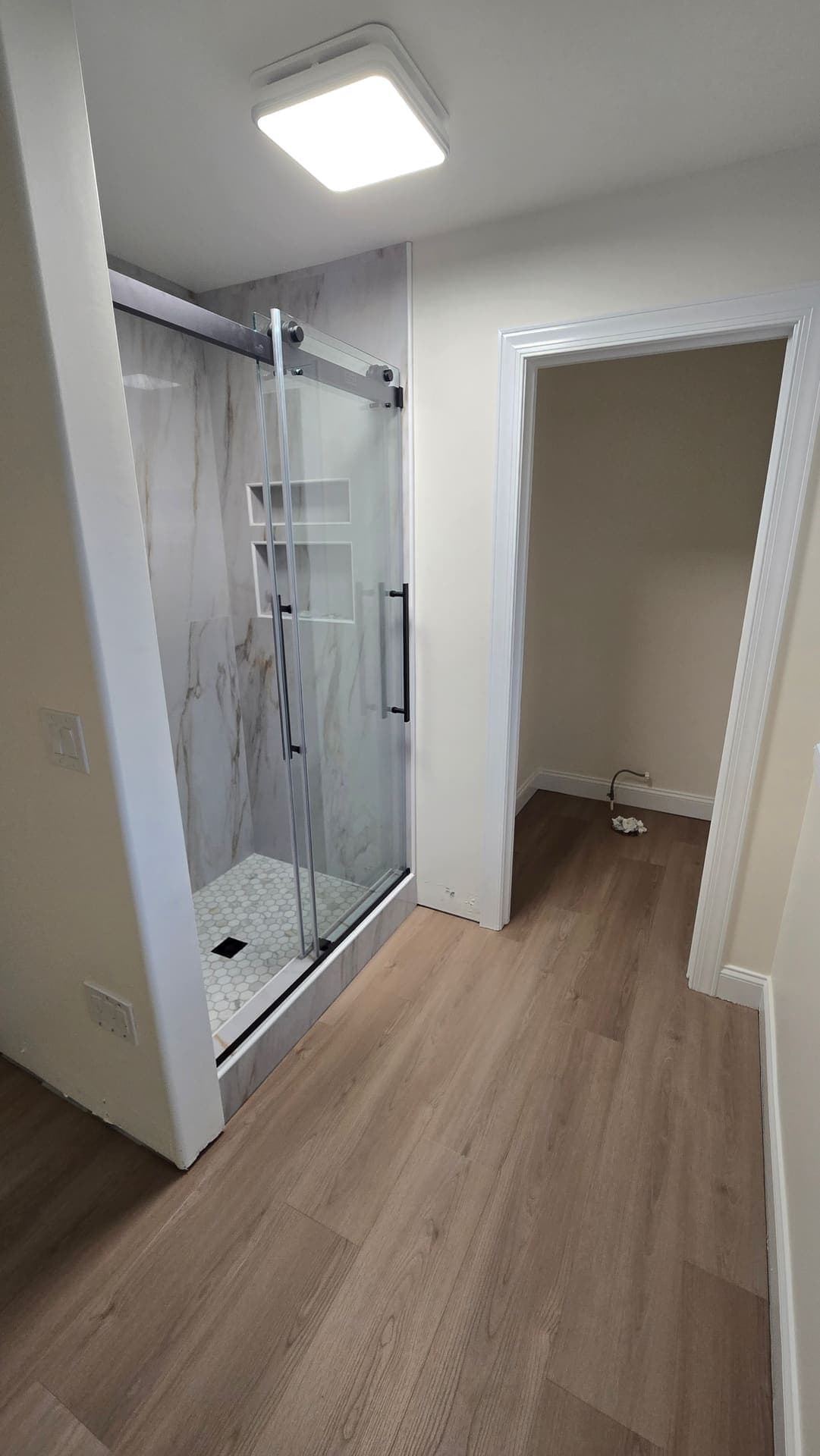
We recently took a hall bath tub down to the studs and built a walk-in shower with marble look tile and a glass slider in Lancaster. The write-up with photos and the actual scope is here: tub to shower conversion in Lancaster. It is a fair preview of what the middle of our range buys.
If you want a number for your own bathroom, start with our dedicated tub to shower conversion service page, which covers the process, the waterproofing system and current local pricing in one place. Then send photos and rough dimensions through our contact page or call (717) 210-8194. We work across Lancaster, Ephrata, Lititz and the surrounding towns from our shop in Denver PA. The bigger picture of our bath work, including full remodels, lives at bathroom remodeling. And when you are ready to price your own project, the full scope, process and 2026 ranges are on our tub to shower conversion service page.
Questions we hear a lot
How long does a tub to shower conversion take?
A tiled conversion takes 5 to 8 working days: demo, plumbing, inspection where required, waterproofing, tile, grout and glass. An acrylic surround conversion takes 2 to 3 days. Anyone promising a tiled shower in 2 days is skipping cure times, and cure times are not optional.
Does removing a tub hurt resale value?
Only if it is the last tub in the house. Keep one tub somewhere and a converted walk-in shower reads as an upgrade, not a loss, especially to buyers thinking about knees and hips.
Can I reuse my existing glass door or tile floor?
Occasionally the floor survives if the new pan and curb match the old footprint, but glass sized for a tub almost never fits a shower opening. Budget for new glass and treat a reusable floor as a pleasant surprise.